overview
From Manaus to Barcelos
An intense river and forest experience traveling where no one else goes
Completely private, just you, your companions, and your guide
Highlights of Your Rio Negro Amazonas Adventure
- Introduction to the Amazonian rainforest, the planets greatest biodiversity in flora and fauna
- Rainforest trekking far off the beaten tracks,
- Discoveries and identification of flora and fauna in the deep rainforest
- Great fishing experiences on big, medium, small, and smaller rivers
- Silent canoe rides on igarapés and tributaries
- Wildlife observation in jungle and rivers
- Night safaris
- Basic Survival Technics, if desired
Link to the map of the travel route
Introduction to the Amazon
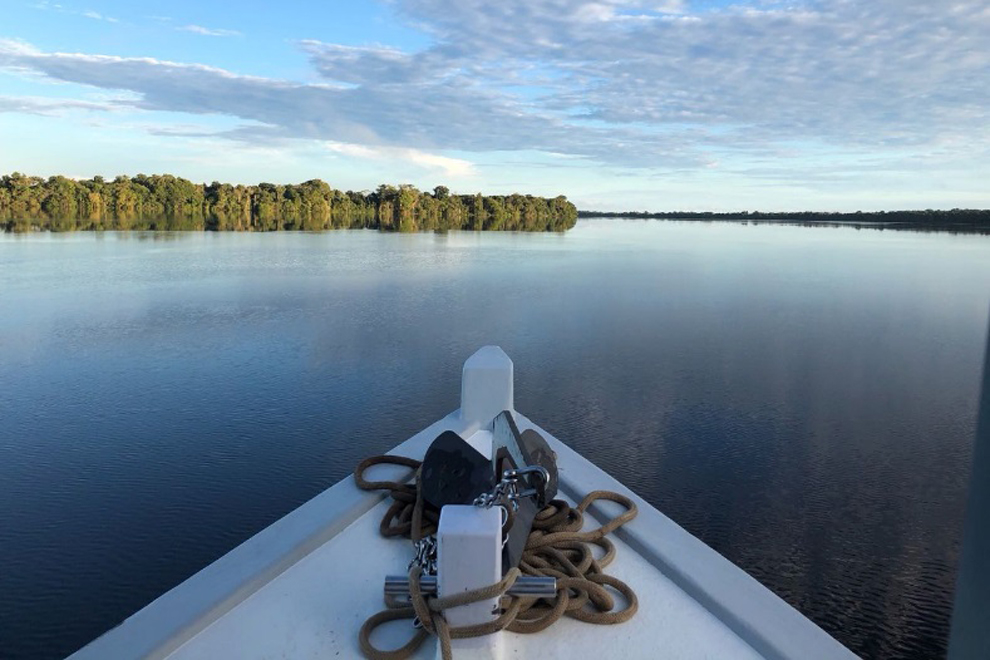
The Amazon rainforest is gigantic. Almost the size of the USA it measures over 6 million km² and spans over Bolivia, Colombia, Venezuela, Ecuador, Peru, French Guiana, Guyana, Suriname and Brazil. The Brazilian part of Amazonia, called "Amazonia legal", is 5 million km², 60% of the total area, while 40% covers the other countries mentioned. This makes the Brazilian Amazon region 7 times larger than France. Amazonia occupies 61% of the total area of Brazil, which is 8.5 million km², encompassing 7 Federal States with another 4 Federal states partially affected. However, the population is only 12.3%, of which 55.9% are native Brazilians.
The Amazon Basin is the largest freshwater reservoir on earth and 1/5 of all water on the globe flows through its rivers. The Amazon River itself is 6,668 km long thus covering a distance from Berlin to New York. In its rivers live 1,400 species, 30 times more fish than all the rivers in Europe put together. The rainforest host 300 species of mammals and 1.300 species of birds. Researchers identified 200 species of trees on a single hectare, with 72 species of ants living on and in just one of these trees.
A journey into the Amazon jungle takes you into a world of extraordinary images and sounds. Navigating the world's largest contiguous rainforest and its rivers requires opening the mind to the unknown and being ready for the extraordinary. The goal of our Amazon trips is to introduce the visitor to this outstanding habitat up close, with tours and expeditions that guarantee an intensive and contemplative insight. On board Southern Cross Tours & Expeditions you will neither encounter cattle herds nor soy plantations. Instead, you will walk through the depths of the Amazon rainforest on the upper Rio Negro River with us and travel its tributaries by boat and canoe. Indigenous peoples and local Caboclos who you will meet are important and respected companion.
The fascinating and unique biodiversity is overwhelming for the Amazon traveler interested in natural history while adventurous nature lovers are enthusiastic with our expeditions!
itinerary
Itinerary
Day 1
Arrival at Manaus
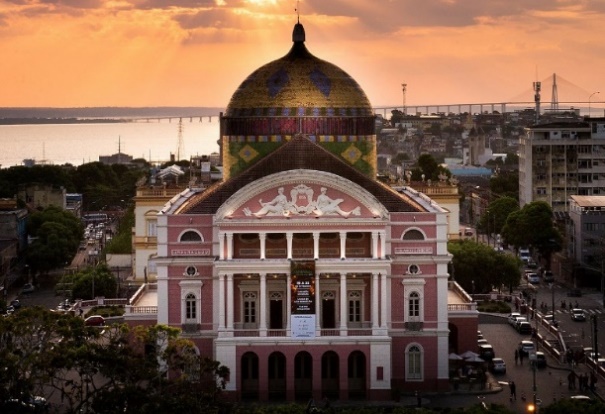
Arrival at Manaus Airport. Our team greets you at the airport and transfers you to the Hotel Villa Amazônia, conveniently located in the city center, just a two-minute walk from the famous Jungle Opera House. A briefing to discuss the itinerary with your guide and the team is set for the afternoon. Otherwise, no further activities today. In the evening´s there's always something going on at Praça São Sebastião in front of the Opera house. There you find Restaurants and bars offering typical food and drinks and music groups play Brazilian live music.
Day 2
Manaus Sightseeing

In the morning, pick up from the hotel for a city tour, including the lively harbor, city market halls, displaying exotic regional food, the Amazon Theater, and the Rio Negro Palace of the German rubber baron Waldemar Scholz. In the afternoon, a boat trip to the so-called "Meeting of the Waters," the confluence of the Rio Solimões and Rio Negro rivers. An interesting natural spectacle of a unique kind.
On this excursion, you will also visit the Januauri Ecological Park, located on the lake of the same name, home to the Amazonian giant water lilies Victoria Regia. The evening is free for a possible visit to the theatre.
Day 3
Novo Airão - Anavilhanas Archipel and National Park - Airão Velho
We will pick you up from your hotel in Manaus at 8:00 a.m. and take you to the dock of our boat, the IARA, in Novo Airão. The journey takes approximately 3-3.5 hours. You will board immediately and your adventure begins with a trip through the Anavilhanas National Park. With its approximately 400 river islands, the archipelago is one of the largest freshwater archipelagos in the world.
We will stop in Airão Velho, a town overgrown with jungle. Once an important center of latex production during the golden age of the rubber boom, we often meet Shigeru Nakayama, a Japanese immigrant from the 1960s, who enjoys telling visitors the story of this forgotten place. Here is what it is all about:
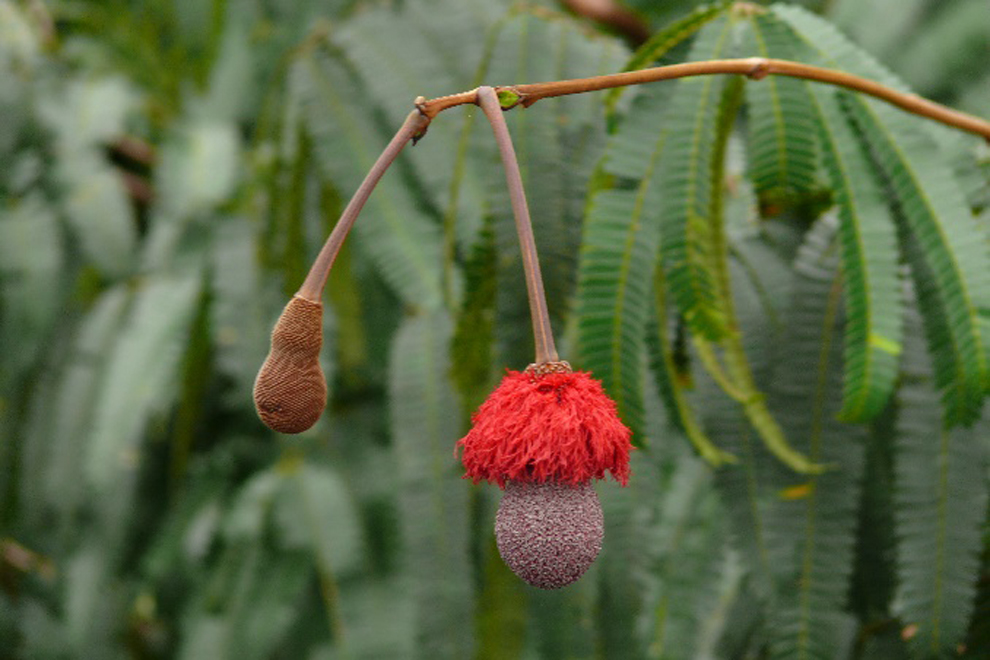
Airão Velho was founded during the rubber boom. Magnificent patrician houses of the entrepreneurs were built in the middle of the jungle, which was obtained by tapping latex from the native rubber tree, Hevea brasiliensis. During a hike through the rocky and cavernous landscape of Madada, the guide will demonstrate firsthand how a rubber tree is tapped. The Golden Age of the rubber boom lasted from 1879 to 1912 and was primarily driven by Henry Ford, who had introduced assembly-line automobile production and needed large quantities of rubber for the manufacture of tires. In the state of Pará, Ford founded the city of Fordlândia based on the US American model, but in the middle of the jungle, and cultivated Hevea brasilienses on a large scale. Until this point, Brazil held a monopoly on the production of natural rubber. One of the first Bio pirate in Brazil was the Englishman Henry Wickham, who smuggled the rubber tree seeds to England, from where they found their way to the English colonies in Asia, where the plantations remained fungus-free and production costs could be controlled. This sealed Brazil's successful economic cycle.
Next on the agenda is a hike through the Madadá forest and its cave landscape. Home to the greater hare-mouthed bats (Noctilio leporinus) and the giant armadillo (Priodontes maximus). We'll take a motorized canoe into the labyrinth of islands and canals to observe tropical birdlife. With a bit of luck, we might encounter a kinkajou (Potos flavus) or even a Giant armadillo (Priodontes maximus)
Day 4
Rio Aturia - Curidiqui - Mirapinima Waterfall - Jaú National Park
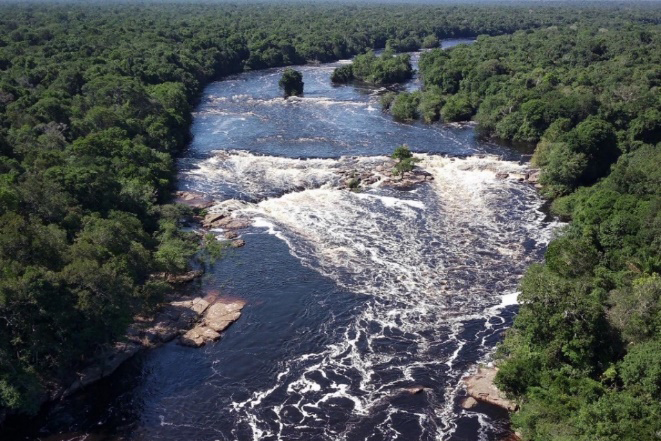
The forests along the riverbanks here are called igapó forests and are flooded for about 6-8 months of the year. The dense, tropical forests remaining on dry soil are called terra firme, with trees such as the samaúma, a kapok tree (Ceiba pendantra) reaching over 50 meters in height and is called the mother of all trees by the indigenous population because of its diverse options of utility.

This climatically variable area offers life for up to 200 different animal and plant species per hectare. An eventful and busy day lies ahead of us. Before breakfast, we head into the forest trying to track down the brown and black howler monkeys (Alouatta guariba and Alouatta caraya), which are native to this area. Their throaty, primal roar can be heard from far away, showing us where to find them. After returning to the IARA for breakfast the days we hit the jungle again for more discoveries.
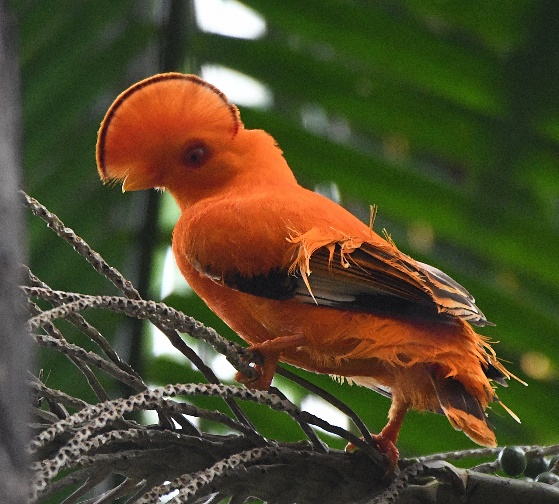
In the region known as "Camaleão," we try to observe the attractive pipit, a member of the ruffed macaw family, with its playful courtship dances. The colorful cock-of-the-rock (Rupicola rupicola), the bi-colored tamarin (Saguinus bicolor bicolor), the black-headed uakari (Cacajao melanocephalus), and even the harpy eagle (Harpia harpyja), can be seen here, with the latter however quite difficult to spot. The impressive-looking harpy eagle, with its 9 kg (female) live weight, is one of the largest birds of prey in the world.
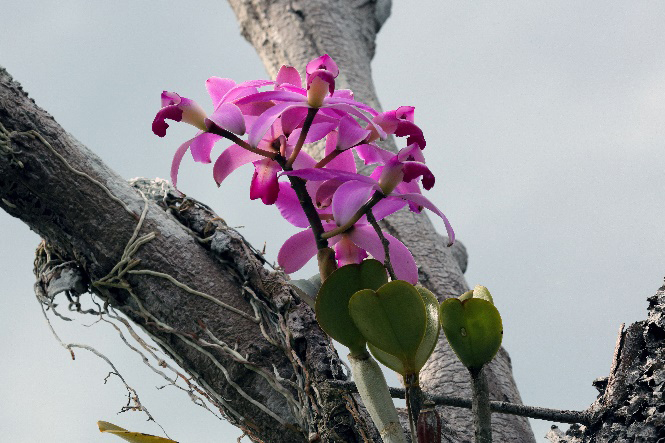
Our guide also knows the spot where the renowned English botanist and illustrator the late Margaret Mee discovered the moonflower, Strophocactus Wittii or Selenicereus Witti. The moonflower is an extremely rare cactus flower that blooms only once a year, during a full moon, for a few hours, and emits a magnificent fragrance. After more than 20 years of searching, Margaret Mee finally found the right specimen for her drawings. Two Indigenous families live in Curidiqui, and we plan to visit one of them to learn about their daily routine by the river and in the forest.
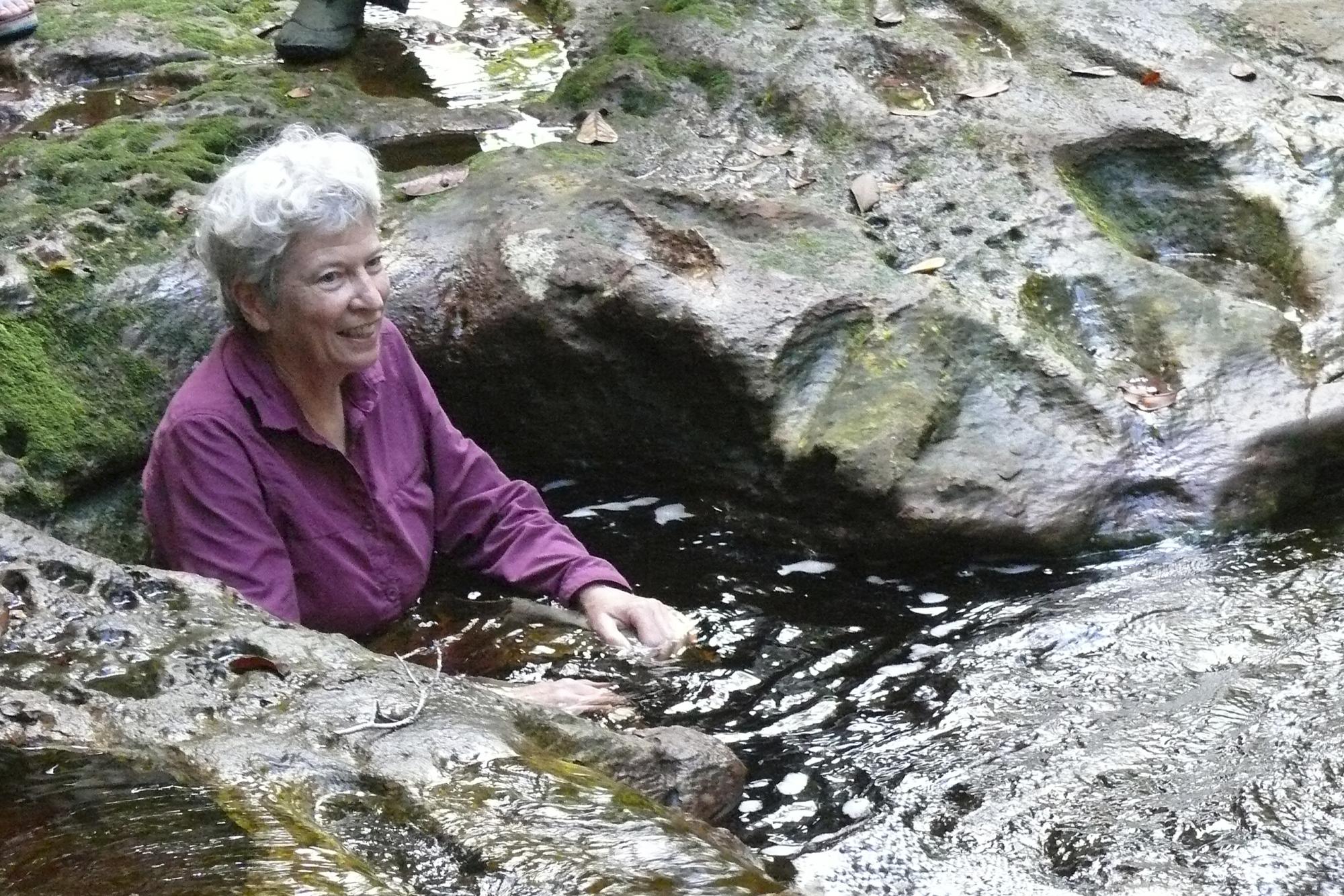
The Aturiá Trail passes through pristine forest of a terra firme landscape. Guides will help identify medicinal plants that often provide the basis for modern medicine. At the end of the trail, Mirapinima, an idyllic waterfall, offers the opportunity for a refreshing swim. Back on board, we enjoy the stunning sunset over the river.
Day 5
Rio Jaú - Rio Unini - Jauaperi - Igarapé Matacacá
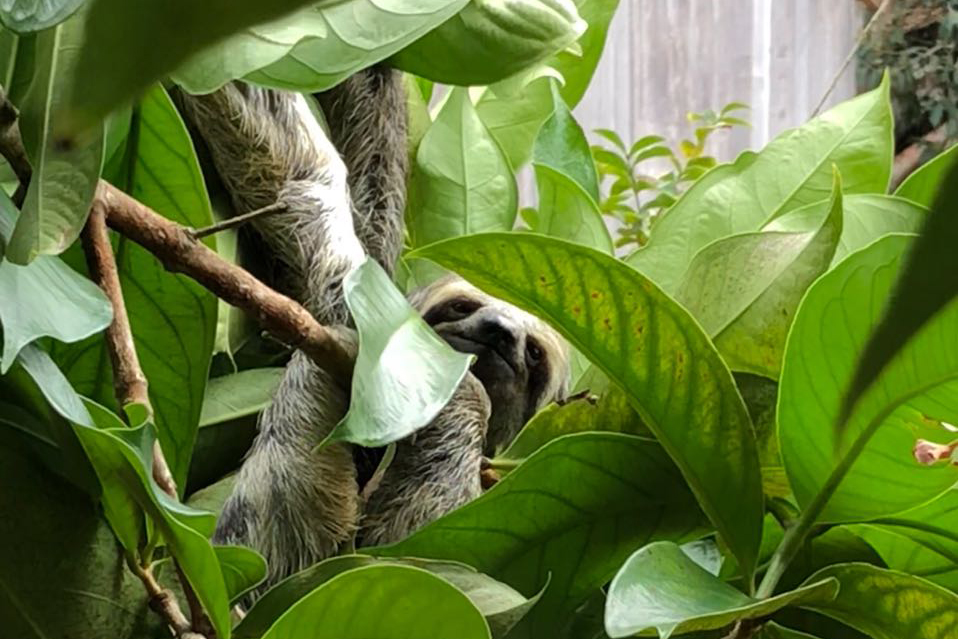
We pass the Jaú and Rio Unini river to enter the Jauaperi river. It borders with the state of Roraima, where the Waimiri-Atroari tribe, wh are known to be wary towards strangers live A short distance away, we explore the remote Igarapé Maracacá by canoe. Its crystal-clear waters are home to many species of fish, including venomous freshwater rays and, above all, ornamental fish such as the discus and cardinal fish, which are highly sought after by collectors. Pink Amazon dolphins (Inia geoffrensis) and manatees (Sirenia sirena), giant otters (Pteronura brasiliensis), and the green anaconda (Eunectes akayima) also call the surrounding waters home.
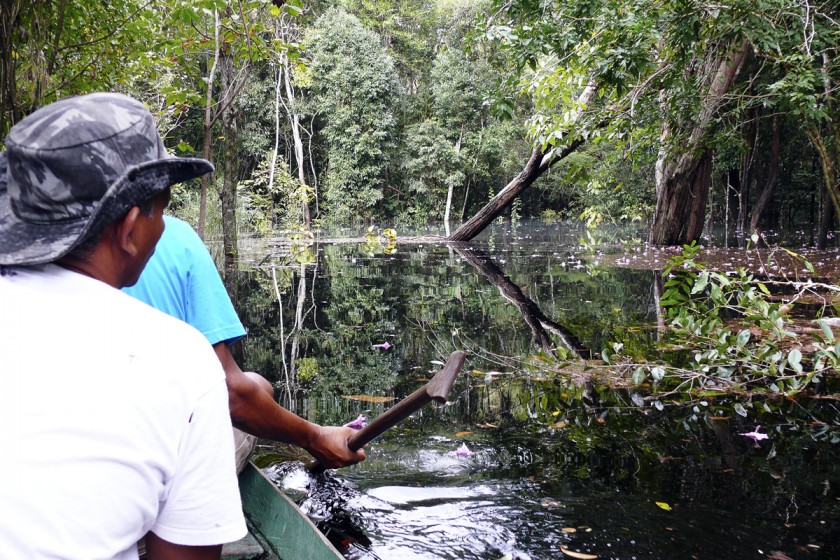
The forests here are home to rich wildlife. Whenever advisable and possible, we turn off the canoe's motor and paddle silently through the submerged forest. This is the best way for us to spot the lowland paca (Cuniculus paka), the red-faced spider monkey (Ateles paniscus), the howler monkey (Alouatta caraya), and the cute three-toed sloth (Bradipus). Poisonous green, but generally non-poisonous, tree snakes occasionally hang over our heads.
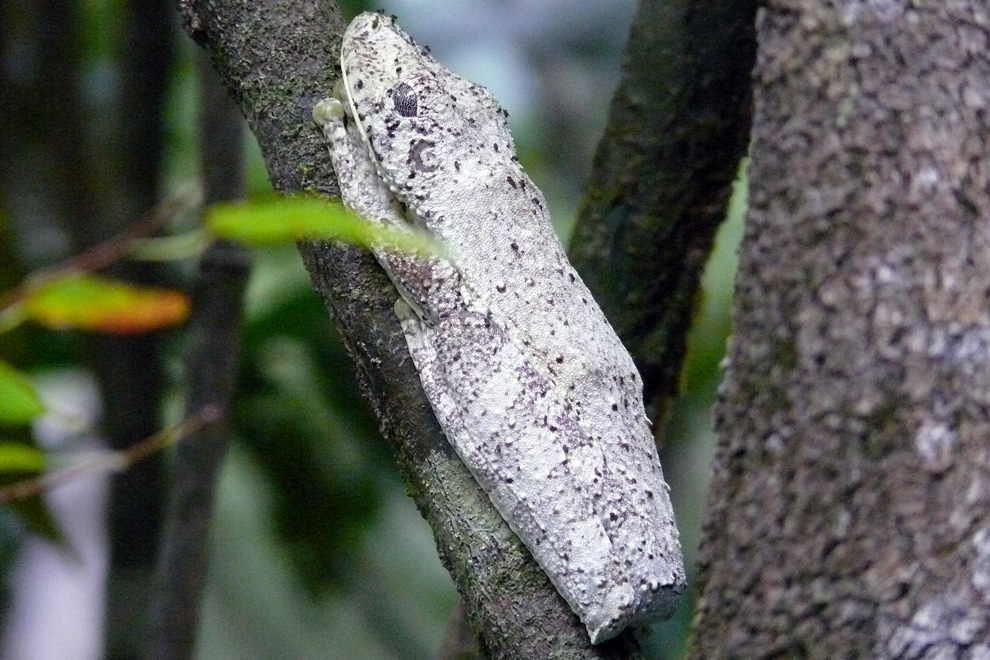
Tonight, we plan to set up camp in the jungle right next to a waterfall and sleep in the hammocks. This is the best way to observe nocturnal animals such as the magnificent poison dart frogs (Ranitomeya amazonica), tarantulas, and other cute little creatures, including caimans whose eyes glow like countless stars in the dark river waters in the light of powerful lamps. We would fish for our own dinner and prepare it over an open fire.
Day 6 to Day 8
Rio Branco estuary - Lago Curiru - Igarapé Maguari - Lago Corumbau
The Rio Branco is, as its name suggests, a whitewater river. This means that on its almost 600 km long course through the state of Roraima, it pours sediment and rich nutrients into the Rio Negro. The entire region around its estuary is therefore arguably the richest in wildlife along the entire course of the Rio Negro.
We plan to stay here a little longer to explore the exuberant biodiversity of flora and fauna under expert guidance. We will spend the next few days in the dense tropical forests along the rivers and igarapés, making discoveries on extensive hikes and canoe excursions into canals, tributaries of the larger rivers, and lakes. At the igarapé Maguari, we plan to set up camp and spend a night in hammocks in the jungle. Beforehand, we plan to fish our own dinner and prepare it around the campfire.
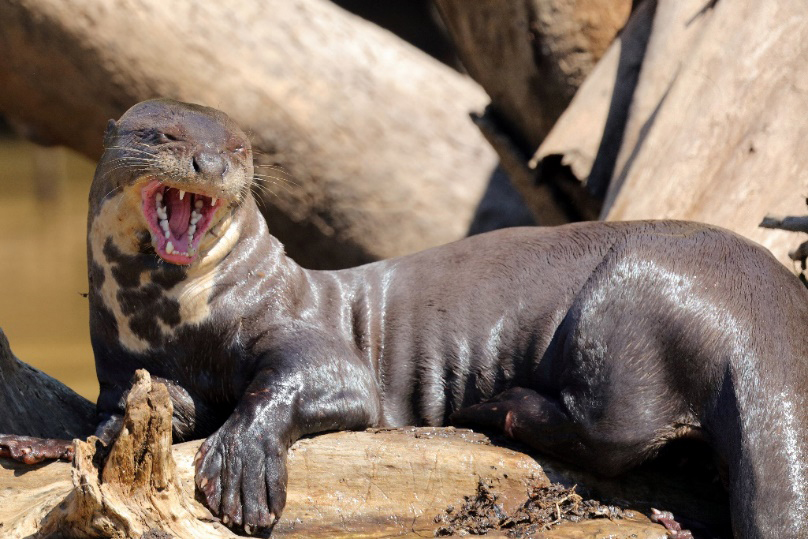
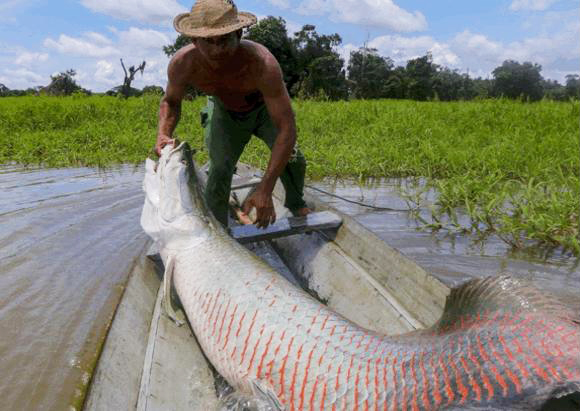
In the rivers, we will again encounter the giant otters (Pteronura brasiliensis), which, despite their cute behavior in the water, are quite aggressive. They have teeth like butcher's knives and know how to use them. The Parapaima, a member of the genus Bonytongue, was first described by the German physician and naturalist Johannes Müller in 1849. The fish can grow to well over 2m in length and weigh over 140 kg. The species is endangered by overfishing but has recently recovered in some regions thanks to conservation measures. The Osteoglossidae is another member of the South American Bonytongue species and is known as a prehistoric fish. The black caiman, Melanosuchus niger, which we are sure to encounter here, is only found in the Amazon and, when fully grown, can grow up to 6m in length and weigh 400 kg. Primates such as the Guiana squirrel monkey, Saimiri sciureus, and the capuchin monkey, Sapajus, with its four subspecies, frolic in the trees. The large black-throated woodpecker, Campephilus melanoleucos, is very photogenic and, true to its species, makes its presence known with loud calls.
Day 9 to Day 10
Amajaú - Rio Jacarei - Rio Jufari - Amajaú
We plan to stay a little longer in the Rio Branco estuary, a highly productive area for Amazon nature lovers and scientists as shown while cruising in silent canoes through lakes, lagoons, rivers, and igarapés to discover and identify flora and fauna while hiking through the dense rain forest.
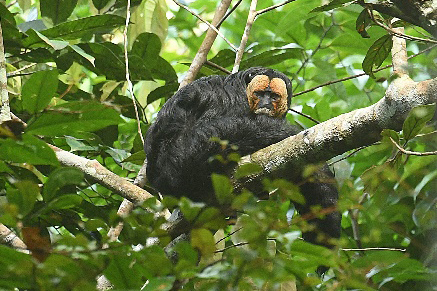
In addition to the already familiar representatives of the local fauna, we also usually encounter primates such as the black-headed uakari (Cacajao melanocephalus) and the black and brown howler monkeys (Alouatta caraya). As for birds we may be able to watch various toucan species, including the white-breasted toucan (Ramphastus toucan), blue-necked glossards (Galbula cyanicollis), the attractive and turkey-like trumpeters (Psophia viridis), curassows (Crax fasciolata), yellow-breasted macaws (Ara ararauna), scarlet macaws (Ara chloropterus), and, above all, a multitude of noisy parrots, to name just a few representatives of the avifauna. During hikes through the jungle, our guides will avoid direct encounters with the collared peccary, a wild boar species that can become aggressive.
The riverine inhabitants living here are very concerned about preserving local biodiversity, which is reflected in their fishing and subsistence farming practices, including extraction of Brazil nuts from the mighty jungle giant Bertholletia excelsia, which grows up to 50 meters into the sky, and copaiba oil from Copaifera langsdorfii, another forest giant that grows well over 40 meters tall. Their activities also include the processing of natural fibers from various sources for a great many purposes.
Day 11 to Day 12
Carvoeiro - Igarapé Urubianú - Reserva Mariuá - Barcelos
We now continue upstream on the Rio Negro, passing the centuries-old settlement of Carvoeiro, located on an island on the right bank of the Rio Negro. In this region, the piaçava thatch (Leopoldinia piassaba) is harvested as part of a sustainable resource extraction process. A number of handcrafted products are made from this extremely durable palm fiber, from brooms to roofing, similar to those found in houses in northern Germany and on the coasts of Holland and England. The locals also produce beautiful handicrafts such as baskets and wickerwork.
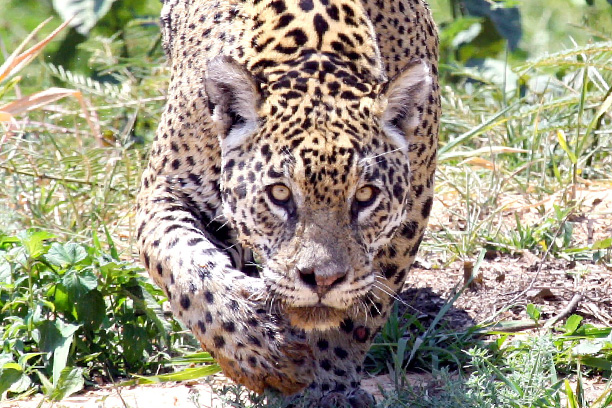
In the afternoon, we reach the Igarapé Urubianú. In this region, known by local guides as being rich in wildlife, we want to try to observe and photograph more animals. In the late afternoon and at night, the lowland tapir (Tapirus terrestris) is out and about, and can be observed both from a canoe and on land, although this requires caution. With a bit of luck, you might spot the jaguar (Panthera onca) from a boat or canoe, stalking the riverbanks in search for prey
The owl-like Urutau, a day sleeper, with its almost perfect camouflage, is difficult to spot. The male hunts for insects at night, and its call can be heard from far away on bright, moonlit nights.

Our journey continues and we reach the Mariuá Nature Reserve. It belongs to Barcelos municipality and comprises a labyrinth of approximately 1,400 islands, making it the largest freshwater archipelago in the world. The pink river dolphin (Inia geoffrensis) appears again and again, performing its capricious tricks, keeping a close eye on us because it is very curious. He's doing well in Mariuá, as around 700 species of fish, both edible and ornamental, populate the region's rivers and igarapés.
About 60% of the local population makes a living directly from catching and exporting ornamental fish, which from here find their way into aquariums around the world. The rare Acará discus and the neon-colored cardinal are particularly popular and sought-after among aquarists. Perhaps we'll succeed in catching the most beautiful and sought-after representatives of their species with our nets. Afterward, however, the fish must be returned to the river.
We reach Barcelos, the largest municipality in the state of Amazonas, with almost 90,000 km². Barcelos lies on the right bank of the Rio Negro and was the first capital of the state, which is now Manaus. This is where "The Trip of a Lifetime" and our adventure into the depths of the Amazon rainforest and rivers comes to an end. We say goodbye to the crew and our guide over a joint dinner at a local restaurant. Today we are staying in a hotel in Barcelos.
Day 13
Barcelos - Manaus
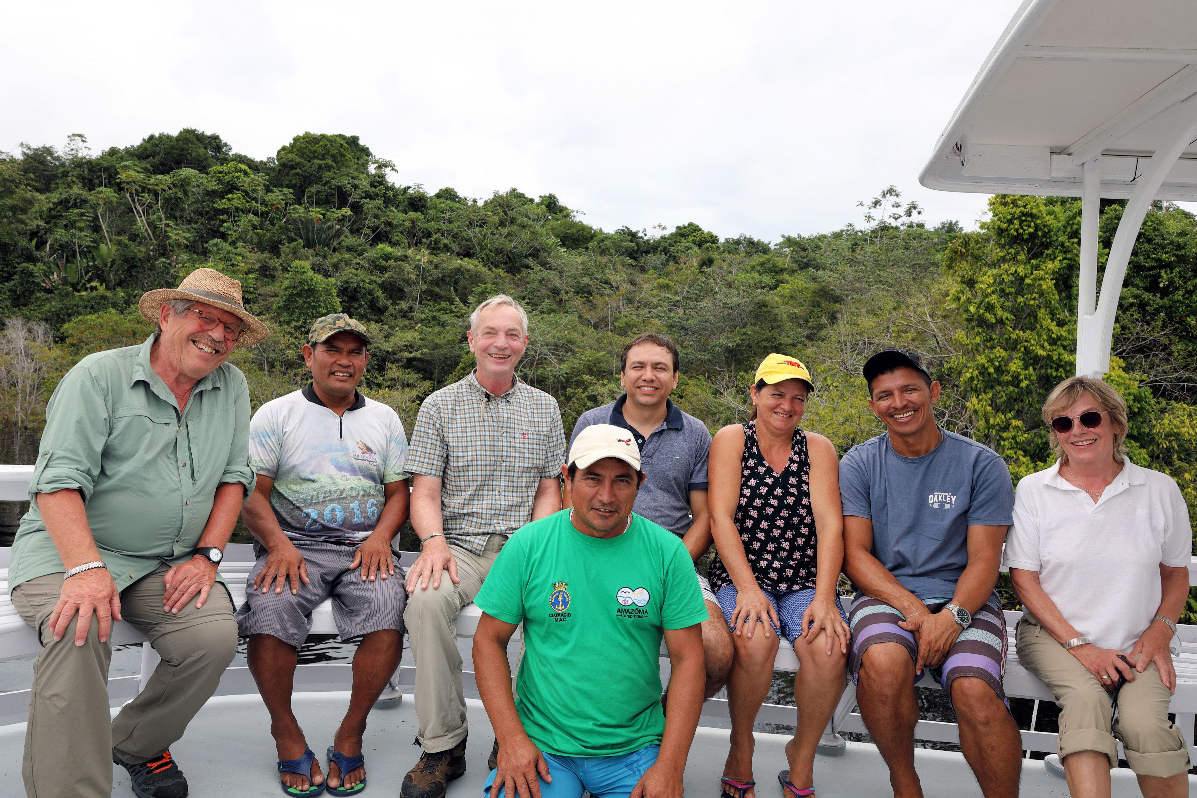
A private charter flight over the Rio Negro to Manaus. This allows us to retrace the route we've traveled in 10 days aboard the Iara within an hour and a half flight!
In Manaus, depending on the booked flight times, we'll either take a direct connecting flight home or onward travel within Brazil, or alternatively, a transfer to the Hotel Villa Amazônia.
continue to the guest comments
comments
Guest Comments
Dr. Bernd and Gisela Neubüser
Hello Mr. Rohmer,
We still draw from our experiences in the rainforest!
We can't imagine that this can be topped.
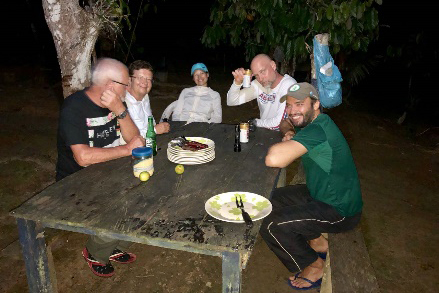
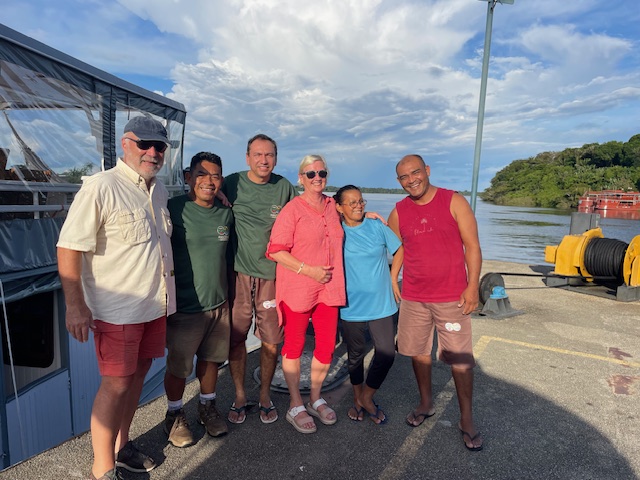
You are welcome to use my report. I am sending you too our photo saying goodbye to the IARA crew. May I advertise you among our friends and acquaintances? Maybe someone from Brazil will contact you soon and would like to come.
With kind regards,
Gisela Neubüser
----
First, I'd like to apologize for not getting back to you until now. But there's a reason for that. We've been back home in Germany on the Baltic Sea for almost a week now, and my thoughts and dreams are still in the middle of the Brazilian rainforest!
The trip moved us so deeply and left a deep impression. Therefore, my sincere thanks for organizing this tour! You raised high expectations in us in your travel description – these were exceeded in reality!
Peter Hagnauer, our city guide in Manaus, quickly introduced us to this city with his local and regional knowledge. It's important to know the historical background of this region, and he conveyed this to us very expertly. The fact that he spoke German was a great advantage for us. Thus, our two and a half days in Manaus weren't too long, which I initially feared.
On the fourth day, Sam picked us up promptly from the hotel and took us to the small ship IARA. It was like a dream on this ship, and that for seven days! The crew was very kind and friendly, and we were always pampered with every possible comfort. Special mention goes to the cook Zi (Zizelia), who did an incredible job in her small galley. Delicious, freshly prepared meals every day (fish for me, meat for my husband), including dessert and a constantly changing selection of fresh smoothies! She even baked her own rolls, made ice cream, and always served a variety of salads with the meal. Simply wonderful! The piranha I caught was on my plate the next day, deliciously prepared!
But now to Sam: You were right, we couldn't have had a better guide! He gave us a very close look at the region, its unique natural surroundings, and the way of life of the animals and people. His indigenous ancestry was a particular advantage. He was extremely knowledgeable about the region we visited. His ability to navigate was absolutely astonishing, especially in the pitch-black night with only the help of his lamp. After hours of driving crisscrossing the jungle, he always brought us back to the ship in a timely manner – a complete mystery to us!
In the jungle, he showed us plants used by the locals for healing, for building shelters, etc. The most impressive part was how he used a flashlight to spot a jaguar in the pitch darkness, which then revealed itself to us in its full size. Even though we communicated in English, he taught us a lot, and we didn't miss a thing!
All in all, it was a truly impressive trip that we will probably never forget. Please excuse my initial skepticism, but your description made everything sound so incredibly beautiful. And our travel experience was indeed even more impressive, unique, and so incredibly beautiful. Both guides are absolutely reliable and knowledgeable.
Thank you again, very much!
Greetings from Germany and wishing you and your family a happy Easter!
Dr. Bernd and Gisela Neubüser
Claudia and Frank
August 2022
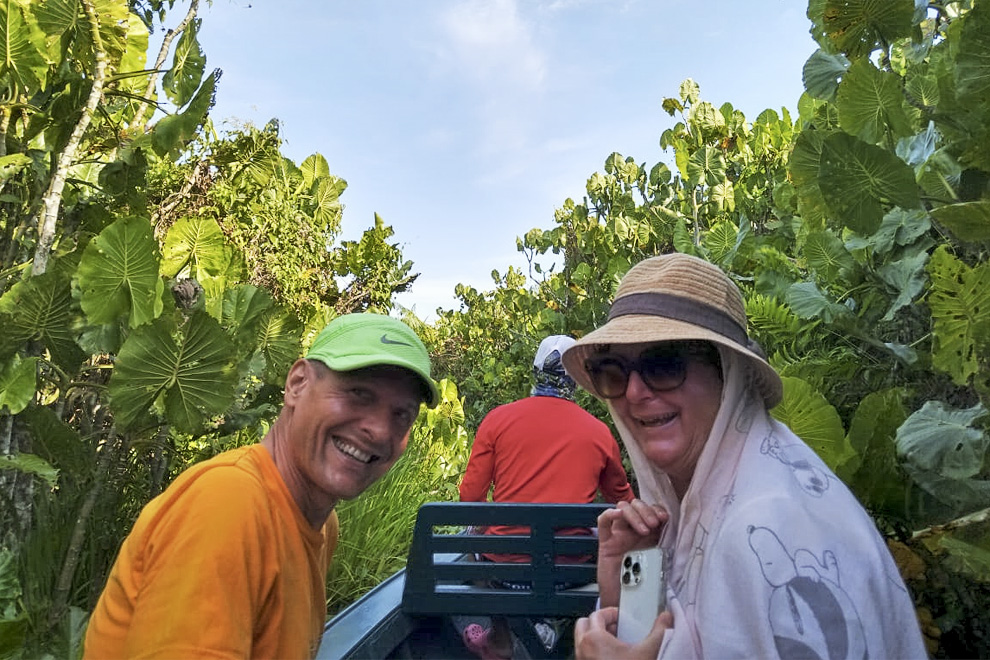
The "trip of your life time "with Southern Cross Tours&Expeditions was just wonderful. Super well organized. Breathtaking sceneries.
Food was always delicious.
A super sensitive, nice, competent, dedicated and open-minded crew, and then Lucia. She is just great. A trip stands and falls with the guide. We always felt that we were in the best hands.
Greetings from Frankfurt